
Caldwell Address History by Era
No single source names every person at one address. A deed proves ownership of the land, nothing more. Dated directories and telephone books supply occupants or subscribers for specific years. Census schedules can reveal a whole household, maps show whether the same building stood on the lot, and these sources overlap even while they answer different questions.
| Local source | Verified span | Access point | Evidence found |
|---|---|---|---|
| Canyon County recorded records | Office history to 1864; web cutoff unverified | Recorder Search or courthouse | Deeds, liens, plats, legal descriptions, recorded parties |
| Courthouse miscellaneous records | 1868–1927; index to 1949 | FamilySearch catalog or center | Older book and index references |
| Caldwell telephone books | 1916–22, 1924–25, 1927, 1932–33 | Library and Idaho State Archives | Subscriber, business, address, or rural route |
| SHS directory reels | Selected years, 1925–72 | Idaho State Historical Society | Dated name, address, and occupation clues |
| Federal census | 1900–1950 public | NARA, FamilySearch, library databases | Household members and enumeration location |
| Sanborn maps | Selected years, 1888–1950 | Library of Congress, SHS, library | Building footprint, use, block, and street context |
A recent transfer points to two records. Pull the parcel card and the deed first. For an early twentieth-century question, set the telephone and directory years beside census schedules and maps. The Recorder publishes no exact online cutoff, so older deeds may take a phone call, a counter visit, or film.
Start Caldwell Previous-Resident Research Today
The Canyon County property search is the cleanest bridge from a modern address to its older record trail. Guest results deliver the basics. They show the owner, parcel number, short legal description, lot size, assessed value, and the last transfer date with its instrument number. A free registered account adds ownership history and other details. Keep two addresses separate. The situs address identifies the parcel location, while the mailing address is only where notices go.
Copy four things exactly. Record the parcel ID, the legal description, the owner or entity name, and the last instrument. An owner may be a trust, an estate, or a company. Its mailing address may belong to an agent. Neither fact proves who sleeps at the house. Still, the instrument number is a precise key. It anchors the search for previous residents and owners.
Fast bridge. The guest parcel card's transfer date and instrument number can lead straight from today's address into the recorded deed trail.
Walk Caldwell Deeds Backward
A chain of title links every recorded ownership transfer for one parcel. The deeds connect like fence posts. Open the Canyon County Recorder Search with the current instrument number or a party name. The portal publishes no exact coverage list. Do not assume every old deed is on the web. Recorder staff at 208-454-7555 can confirm the cutoff. They can also explain the copy route for older records or images.
- Record today's owner, parcel ID, legal description, transfer date, and instrument from the assessor card.
- Find the purchase deed and read both parties, the document type, recording reference, and legal description.
- Search the seller as an earlier buyer for the same land. Match the lot or legal description, not just the street number.
- Repeat the link, noting splits, merges, estates, trusts, plats, and boundary changes.
- When the web trail ends, ask the Recorder for books or film, then check FamilySearch and the state archives.
- Grantor
- The party transferring an interest, often the seller.
- Grantee
- The party receiving the recorded interest, often the buyer.
- Legal description
- The lot, block, subdivision, or metes-and-bounds wording that identifies the land.
- Chain of title
- The connected sequence of recorded transfers for the same property.
Not every recorded document is a sale. A mortgage, lien, reconveyance, or trustee filing is not automatically an ownership transfer, so read the document type before adding any name to the ownership line. Certified copies cost the published per-page amount plus a certification fee, and emailed electronic records are listed at five cents per image. Confirm current charges with the office.
Caldwell Records Before the Web
Canyon County reports record custody reaching back to 1864. Caldwell came later, platted as a railroad town in 1883. A county-seat transition followed in 1891 and 1892. That timeline explains the odd labels. An early property clue may use Ada County, Canyon County, railroad, rural-route, or plat language instead of a familiar Caldwell address. No courthouse disaster broke the record line. The real obstacle is a format gap between books, film, converted images, and the public portal.
The FamilySearch catalog identifies Canyon County miscellaneous records from 1868 through 1927 and an index through 1949. Coverage runs deep. Image access varies by film and account. The originals trace back to the courthouse. Caldwell FamilySearch Center, 3015 S. Kimball Ave., offers local staff and affiliate access. The county counter, FamilySearch, and archives form the fallback chain when previous residents drop out of a web result. Past residents rarely vanish completely.
Note: Preserve the county, town, rural route, subdivision, and printed street form before translating an old entry into a modern address.
Caldwell Previous Residents in Print
Print fills a real gap. It stands between a recorded owner and the people actually listed at the address. Verified Caldwell telephone volumes exist for 1916 through 1922. They also cover 1924 and 1925, 1927, and 1932–33. Idaho State Historical Society directory reels cover selected Caldwell and regional years. They run from 1925–26 through 1972. Polk citations add Caldwell editions from 1945, 1948, 1950, and 1978. These are dated clues only. No list claims every year survives.
A telephone subscriber may be a household head or a business. A city directory entry can carry a residence and an occupation. Neither is a full answer. The Caldwell sources offer no complete reverse run. Ask Caldwell Public Library's Idaho Room, SHS, and University of Idaho staff about the exact volume. Ask too whether it has a street index. The collections themselves are detailed on the Caldwell city directory page.
Test initials, surname-first forms, widow notations, misspellings, abbreviations, and nearby numbers. Small variations hide real families. Always cite the title, year, page, and printed form. That discipline keeps two similar names from becoming one false household.
Pair Caldwell Directories With Census
Federal census schedules currently reach 1950 under the 72-year release rule. That leaves a wide open window. The 1900 through 1950 counts add household members, ages, and birthplaces. They also list occupations that an owner record omits. The 1890 federal census was lost nationwide. The gap is not blank. Idaho State Historical Society built a reconstructed 1885–1894 index from land, tax, newspaper, will, court, and naturalization records. The index also draws on other sources.
Use a short sequence instead of treating one hit as final:
- Choose the directory or telephone year closest to the event.
- Preserve the printed address, initials, surname form, and occupation.
- Find the closest public census and inspect the full household and neighboring lines.
- Return to the prior and next directory years to test whether the same household remained.
- Check the deed, newspaper, or cemetery record before stating that the person lived there.
An enumeration district was the small patch a census taker walked. Its boundaries rarely match today's ZIP codes or Caldwell city limits. A directory entry and a census schedule agree best when the name, household makeup, address context, and date all point the same way.
Map Old Caldwell House Footprints
Sanborn fire-insurance maps answer a different question than a residents directory does. They show whether a building stood, its footprint, its use, and the block around it. Official Caldwell historic research cites sheets from 1888, 1890, 1892, 1900, 1908, 1911, 1921, and 1950. The Library of Congress Caldwell map offers digital December 1892 sheets for close reading.
A map will not name past residents, though. It only proves the address needs more digging. A renumbered house, a renamed street, a new subdivision, or a rural-route description can defeat a literal lookup even when the lot itself never moved. Caldwell's railroad grid and early plats make the legal description especially valuable here.
Note: Use Sanborn sheets to date the structure and block, then return to a named directory, census, deed, or newspaper source.
Caldwell Archives Keep Visual Clues
The Caldwell Historical Collection publishes open, sortable image collections covering Caldwell 1921–1940, Caldwell 1941–1960, plus People, Maps, Places, Railroads, and the Interurban Railway.
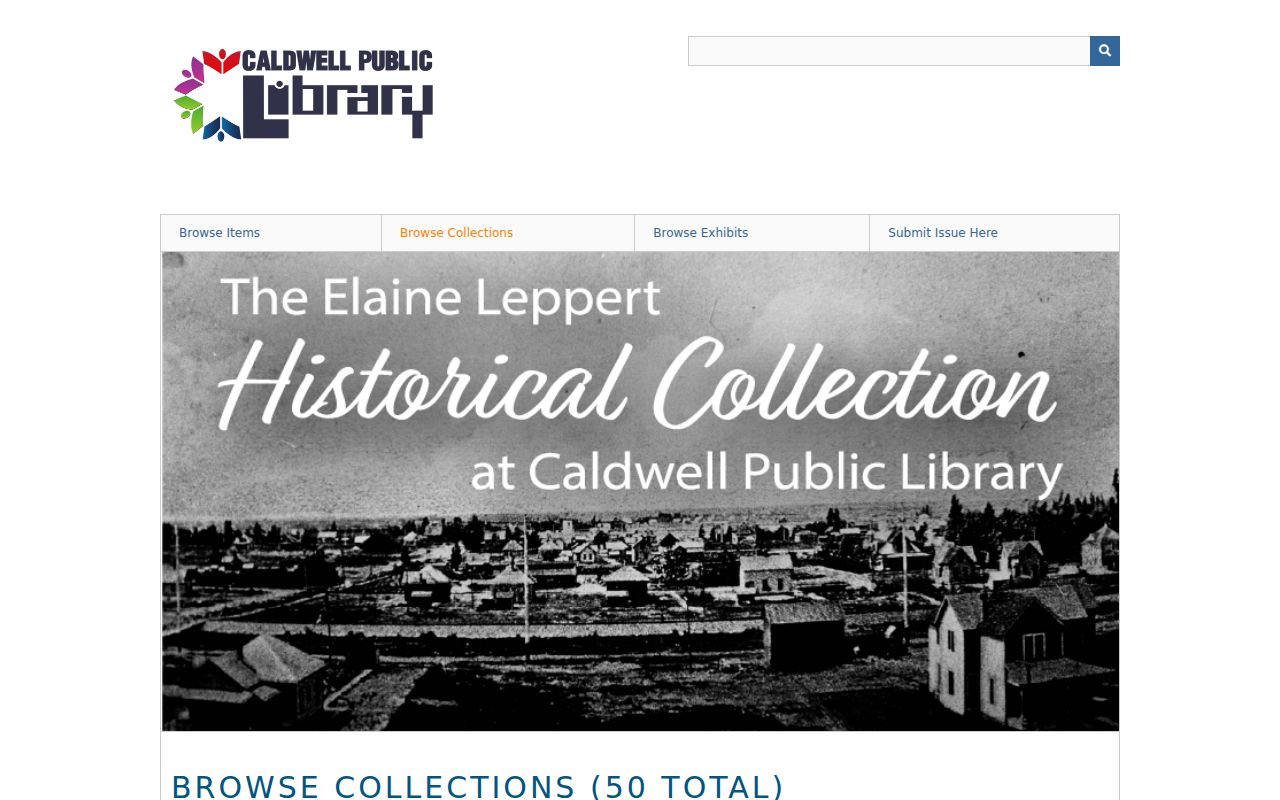
An old storefront can anchor a household to the right part of Caldwell. A rail feature or streetscape works too. A photograph alone identifies no one. Pair the item's date and catalog description with the parcel trail and the residents directory.
The Idaho State Archives genealogy resources go deeper. They add family histories, printed census indexes, death-certificate film, military rosters, and searchable indexes.
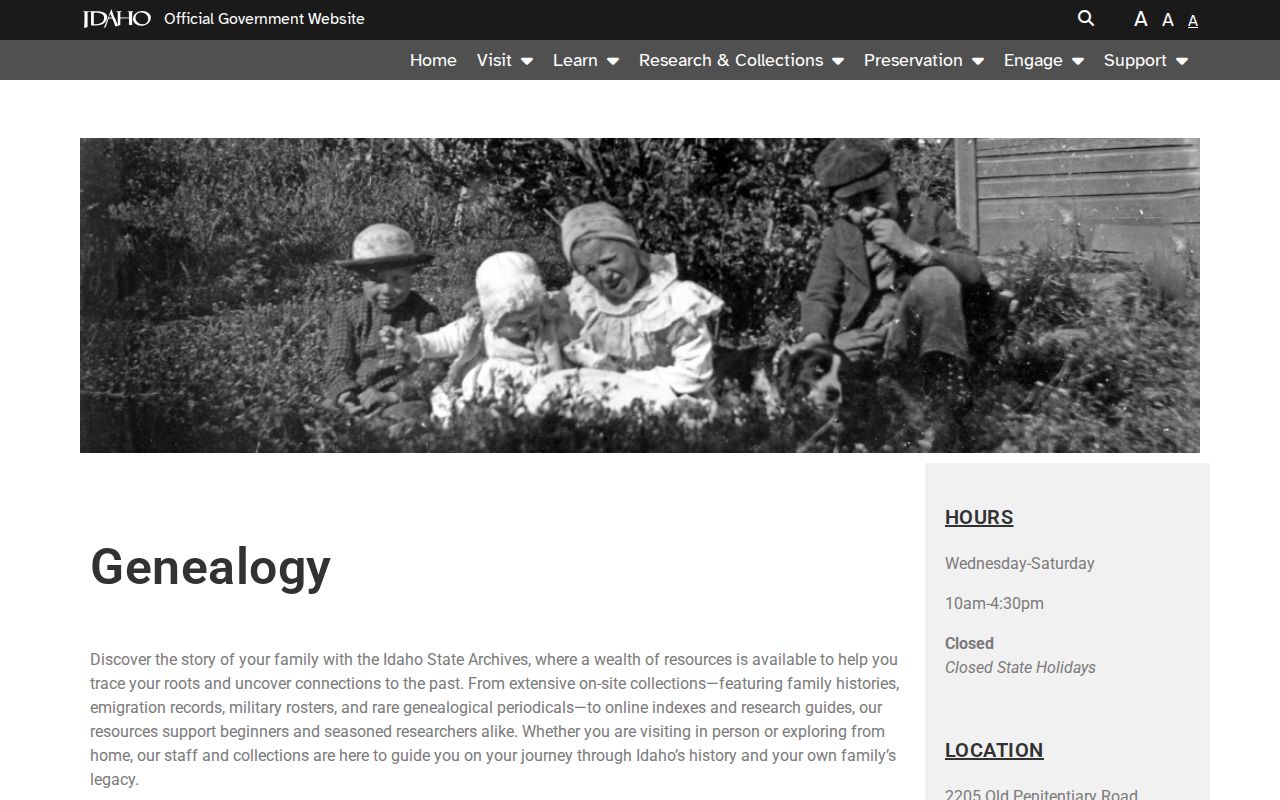
SHS cautions that indexes carry variants and misspellings. Search every spelling form, and record the one the source itself printed.
Close Caldwell Household Trails
Newspapers, probate records, and cemetery files can tell you where past residents of Caldwell went. They also show who survived them. University of Idaho and SHS microfilm covers Caldwell newspaper titles. The Caldwell Tribune runs begin in 1883 and continue through later twentieth-century runs. Caldwell Public Library provides Idaho newspaper databases and modern text archives. It promises no separate obituary index, though. Search names in maiden and married forms, the street, churches, organizations, and Canyon Hill Cemetery.
The cemetery's city route can pinpoint a grave location. The office can help when the dynamic database fails to render. An obituary is a lead toward death, family, cemetery, and probate evidence. It is never a certified vital record. Probate names heirs and explains how an estate transferred. Return to the deed or court file before closing the chain.
Use records with care. Research Caldwell previous residents for family history, estate work, or the story of a house. Never use a past address to track, threaten, or harass a living person.